We make AI something an organization can say yes to.
DKOD is a governed build pipeline. It finds the tools employees have already built with AI and scores the risk. Then it lets anyone build the internal tools they need, in your own cloud, under your policies.
The same pattern, everywhere.
- 1The pattern
- Employees everywhere are shipping AI‑built internal tools. No git, no auth, secrets in .env files, and nobody in IT knows they exist. The tools are useful. The way they ship is not.
- 2The two bad options
- Ban the tools, and the need that produced them pushes the work further out of sight. Ignore them, and the risk grows quietly. Neither option lets the organization say yes.
- 3What we build
- DKOD gives an organization the picture first. dkod-signals inventories AI‑built apps on every device and rolls up into an org-wide risk view. Then it offers the safe path: anyone can build the internal tools they need with AI, inside the DKOD harness, in your own cloud, under your policies.
Meet the founders.
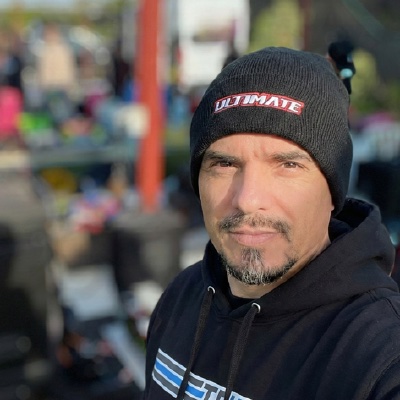
Haim Ari
Co-founder & CTO of dkod
Previously AI Engineering & DevOps Lead Architect at Start.io
15+ years as a DevOps engineer and team lead in ad tech, designing and operating large-scale production systems. Led infrastructure teams across Kubernetes and AWS: CI/CD pipelines, multi-datacenter deployments, and auto-scaling architectures that keep real-time bidding platforms running at scale.
Co-founded DKOD with Ran Avidan because IT was left with two bad options: ban the AI‑built apps employees depend on, or pretend they are not there.
Writes about agentic development and AI engineering methodology at Vantage Academy.

Ran Avidan
Co-founder of dkod
Co-founder of Start.io
Co-founded Start.io in 2010 with Gil Dudkiewicz, back when it was still called StartApp, and ran research and product development as its CTO, growing it from two founders into a mobile marketing platform with offices across seven countries.
Before that, Director of Business Innovation Strategy at Amdocs, VP of Products at NewACT after Amdocs acquired it, and product and development roles at Followap before NeuStar bought it. B.Sc. in information systems and an MBA, both from the Technion.
Co-founded DKOD because the same pattern kept turning up everywhere: teams shipping software built with AI, with nothing reviewing it, no inventory of it, and duplicated tooling nobody owns.
An invisible risk becomes an inventory. An inventory becomes a safe path.
- Apps ship with no git, no auth, no review.Every device inventoried. One metrics-only report.
- Secrets sit in .env files on laptops.Each app scored for risk, and for whether it is worth keeping.
- IT has no inventory of what exists.Every app built inside the DKOD harness, under your policies.
- The only options are ban or ignore.A reviewer and a reason for everything else. Nothing silent.
Three parts. One path.
Discovery is the wedge. The pipeline is the product. Everything runs on your infrastructure.
- 1Now available
dkod-signals
A scanner for every company laptop, on macOS, Windows, and Linux. It runs once in the background, finds AI‑built apps, scores their risk, and reports numbers only.
- 2Now available
Aggregation and reporting
The DKOD dashboard rolls device reports into an org-wide view of AI‑app risk posture. DKOD runs it for you at dashboard.dkod.app.
- 3Now available
Governed build pipeline
Builds the dashboards, web apps, agents and APIs your teams ask for, and deploys them to your own cloud. Policy checks, human approval by risk, and a full audit trail.
DKOD inside your agent. Guard inside Dkoder.
Dkoder is the DKOD client in your AI agent or IDE. It puts a DKOD band above the prompt and signs you in to DKOD. It holds the floor every organization gets. Guard is a feature inside DKODER. It turns your organization's policies into rules that every signed-in agent must follow.
A refusal says which one refused: the DKODER floor, or a Guard rule of your organization.
| Row | Dkoder | Guard |
|---|---|---|
| What | The DKOD client inside your AI agent or IDE. | A feature inside Dkoder. |
| Rules | The floor every organization gets. Deliver is the only way app code ships. No secret values in files. No skipped git hooks. No force push. | Your organization's own rules: blocked commands, guardrails and policy text, read from your governance repository. |
| Needs | Nothing. It works signed out, and the band asks you to sign in. | Sign-in to your organization, and Guard turned on in the DKOD dashboard. |
| Ships as | A Claude Code plugin today. Other IDEs later. | Part of the same plugin. Your company can also install Dkoder on its devices so it cannot be turned off. |
Install in Claude Code
/plugin marketplace add dkod-ai/dkod-plugin/plugin install dkod@dkod-ai- /mcp, pick dkod, then Authenticate
What we will not compromise on.
- 1
Privacy by architecture
Nothing leaves your infrastructure without consent. Reports are metrics-only, with an optional copy in your own bucket. Source never leaves a laptop unless your organization turns that on.
- 2
Visibility before enforcement
You cannot govern what you cannot see. Discovery produces the picture before anyone makes a policy decision.
- 3
The safe path, not the ban
Employees built these tools because they needed them. DKOD keeps the value and removes the risk.
- 4
Explicit over silent
Risky apps get a named reason and a reviewer. Every decision is visible and deliberate.
Built with the people who run the org.
IT, security, and platform teams wrestling with AI‑built software. Get help, share what you found, and shape where DKOD goes next.
DKOD your org.
Deploy dkod-signals and see exactly what your organization has built with AI. Then decide, with the facts in hand, what deserves the safe path.